

















Instructions for using the asphalt softening point tester
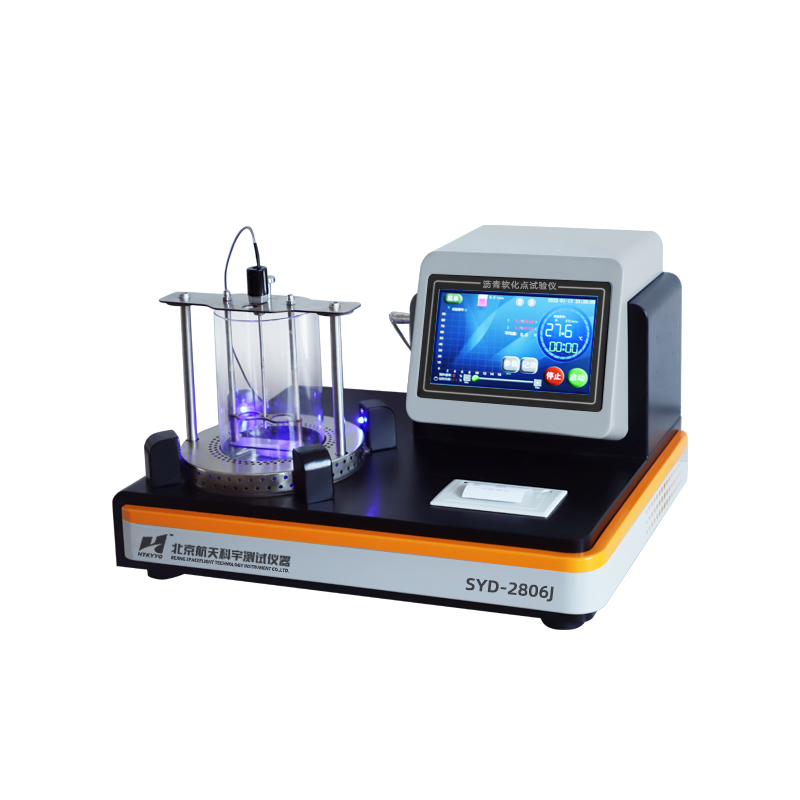
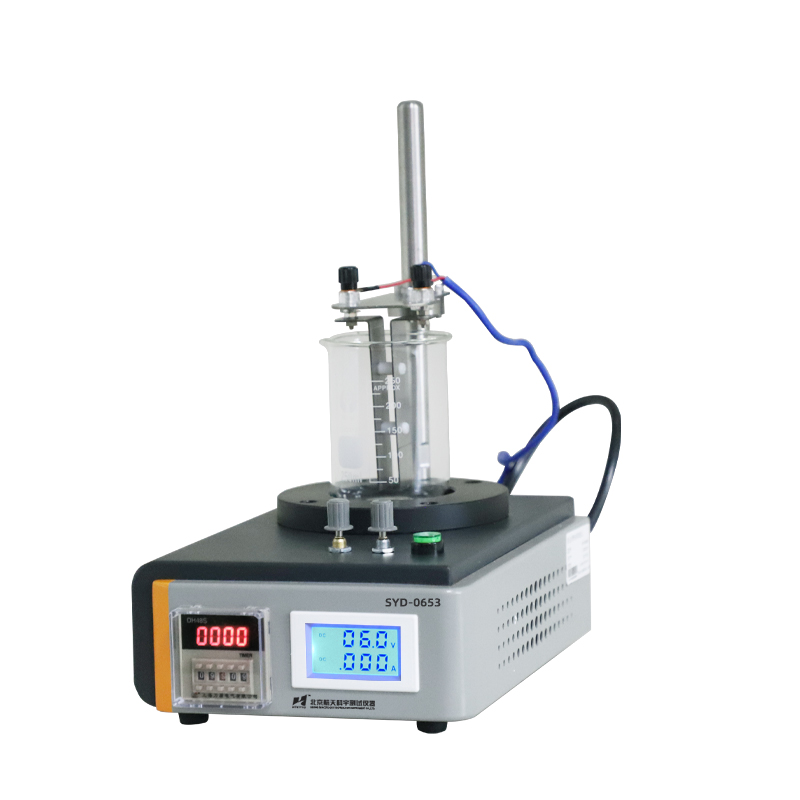
The asphalt softening point tester is a specialized equipment used to determine the softening point of asphalt (global method). Its core principle is to soften and sag the asphalt sample to a specified distance by heating, and record the temperature at this time as the softening point.
1、 Equipment composition
Host: including heating bath, temperature sensor, stirring device, and lifting bracket.
Sample ring: made of brass material, used for preparing asphalt samples.
Steel ball: a standard steel ball with a diameter of 9.53mm and a mass of 3.50g ± 0.05g.
Steel ball positioning ring: Fix the steel ball directly above the sample ring.
Bracket: Support the sample ring and steel ball, control the sagging distance (25.4mm).
Temperature measurement and control components: temperature controller, timer, heating tube.
Auxiliary tools: scraper, beaker, glycerin (or silicone oil, used as heating medium), constant temperature water bath (for preheating the sample).
2、 Preparation before the experiment
sample preparation
If the asphalt is solid or semi-solid, it needs to be heated and melted at a temperature not exceeding 100 ℃ of the expected softening point. The mixture should be continuously stirred during heating to avoid local overheating.
Wipe the sample ring clean and place it on a flat glass coated with glycerin (or silicone oil) to prevent the sample from sticking.
Pour in the melted asphalt sample, with the liquid level slightly above the edge of the sample ring, and let it cool to room temperature (usually for more than 1 hour).
Use a hot scraper to smooth out the asphalt on the surface of the sample ring, ensuring it is flush with the ring opening.
equipment debugging
Add glycerol (or silicone oil) to the heating bath, with a liquid level that can submerge the sample ring by at least 50mm during the testing process.
Install a temperature sensor to ensure that the probe is located in the middle of the heating medium and does not come into contact with the bath wall and stirring blade.
Turn on the power and check if the temperature controller and mixing device are working properly; Set the stirring speed to 500r/min ± 50r/min.
Sample preheating
Select preheating temperature based on the expected softening point of asphalt:
Softening point below 80 ℃: Place the sample ring, steel ball, and positioning ring containing the sample together in a 5 ℃± 0.5 ℃ constant temperature water bath and keep it warm for 15 minutes ± 1 minute.
Softening point higher than 80 ℃: Use a constant temperature water bath at 32 ℃± 1 ℃, keep warm for 15 minutes ± 1 minute, and use silicone oil as the heating medium.
3、 Operation steps
Install sample components
Remove the insulated sample ring from the constant temperature water bath and install it onto the bracket of the heating bath.
Place the steel ball positioning ring over the sample ring and insert the steel ball so that it is located at the center of the asphalt sample.
Set heating parameters
Turn on the temperature controller and set the heating rate to 5 ℃/min ± 0.5 ℃/min (this is a key parameter that needs to be strictly controlled).
Activate the heating and stirring function and start timing.
Observation and Recording
During the experiment, observe the sagging of the asphalt sample under the gravity of the steel ball.
When the asphalt sample droops to a distance of 25.4mm from the lower support, immediately record the temperature at this time, which is the softening point of the asphalt.
Two samples are required for parallel testing, and the average of the two results is taken as the final result; If the difference between two tests exceeds 2 ℃, a new test is required.
4、 Post experimental processing
Stop the equipment: After the experiment is completed, turn off the heating and stirring switches and cut off the power supply.
Cleaning components: After the heating medium cools down, remove the sample ring, steel ball, and positioning ring, clean the residual asphalt with organic solvents (such as trichloroethylene), dry them, and store them properly.
Organize data: Record information such as sample name, test temperature, two measurements, average value, etc., and fill out the test report.
5、 Precautions
Heating rate control: It is necessary to strictly maintain 5 ℃/min, as too fast or too slow a rate can lead to result deviation.
Heating medium selection: glycerol is used for softening points
Sample preparation requirements: The surface of the sample ring needs to be scraped flat, otherwise it will affect the uniformity of the force on the steel ball.
Safety protection: Avoid contact with high-temperature baths during the heating process; When cleaning with organic solvents, keep away from sources of fire.
Calibration requirements: The equipment needs to regularly calibrate the temperature sensor and heating rate to ensure test accuracy.
6、 Common faults and solutions
Unstable heating rate: Check if the heating tube power is normal or if the temperature controller parameters are drifting, and recalibrate the temperature controller.
Mixing abnormality: Clean the debris from the mixing blade, check if the mixing motor is faulty, and replace the motor if necessary.
Sample adhesion glass: When preparing the sample, the flat glass should be evenly coated with glycerin to ensure smooth separation between the sample ring and the glass.
Related news

 400-021-5850
 Email:8B2, 7th Floor, No. 6 Nanxinyuan West Road, Chaoyang District, Beijing